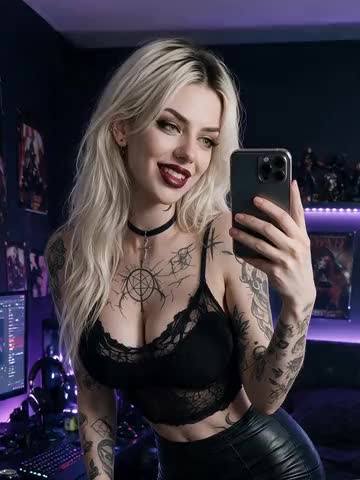

TL;DR: AI video is closing fast on real footage. The agency model is pulling ahead of solo operators, and Goldman Sachs projects the creator economy near $480 billion by 2027. Regulation is coming, and it favours operators who comply rather than hide.
Ask whether AI influencers are the future and you get two answers, both wrong. One camp says they are a passing gimmick. The other promises overnight riches. The reality of the future of AI creators sits between those, and it is more interesting than either. This is where the industry is actually heading through 2027, drawn from platform behaviour, published market data, and what the tooling can already do today.
How big is the AI influencer market?
Start with the number everyone quotes badly. Goldman Sachs Research valued the wider creator economy at roughly $250 billion in 2023 and projected it could approach $480 billion by 2027. That figure covers every creator, human and synthetic, across ads, subscriptions, and commerce.
AI creators are a small slice of that today. They are also the fastest-moving slice, because the thing holding the wider market back, the cost and time of producing content, barely applies to a generated persona. When a new creator can be stood up in a week instead of recruited over months, the supply curve bends. That is the real signal behind the AI influencer market size: not the headline dollars, but how cheaply new inventory enters.
1. AI video will become hard to tell from real footage
In 2025, still images crossed the uncanny valley. Through 2026 video started catching up, and short clips at feed resolution are already convincing on a phone. By mid-2027, expect AI-generated video to be difficult to distinguish from real footage at standard social resolutions, the 720p and 1080p that fan platforms and social feeds actually serve.
The consequence is commercial, not technical. Portfolios shift from image-first to video-first, and video subscribers pay more and churn less. The creator who has already built a video pipeline captures that; the one still shipping stills gets repriced.
2. Platform verification will split the market in two
OnlyFans and its peers keep tightening identity checks. That does not close the door on AI creators. It sorts the market.
- Verified human creators lean into the one thing they can prove, a real identity, and charge a premium for it.
- AI creators concentrate on platforms built for them, or on white-label setups the operator controls, where verification is not the gate.
Neither side wins outright. The operator who reads which platform rewards which model, and places each persona accordingly, does.
3. The agency model will pull ahead of solo operators
YouTube went from lone uploaders to multi-channel networks for a reason: past a certain scale, coordinated beats scattered. The AI creator space is on the same path. Agencies consolidate the parts a solo operator does badly, persona design, consistent content, cross-promotion between profiles, and the analytics to know what to make next.
A solo operator can still win one persona. Running ten at a steady quality is a different job, and it is where scaling to 20+ AI personas stops being a content problem and becomes an operations one. The operators who learn that early set the quality bar everyone else is measured against.
4. Revenue per creator will climb
Two forces push the average up. Content quality keeps improving, and fan behaviour around AI personas is maturing from novelty to habit.
- Subscription prices drift from the $9.99 anchor toward $14.99 and above
- Pay-per-view content earns more as libraries deepen
- AI-driven chat turns idle subscribers into spenders
- Non-Western markets, especially across Asia and South America, open faster than most operators expect
Put together, a reasonable estimate is that the average profile moves from roughly $3,000–$8,000 a month in early 2026 toward $6,000–$12,000 by the end of 2027. Treat that as a projection, not a promise: the spread between a well-run persona and a neglected one is already wider than the average itself. Our full economics breakdown walks the line items behind those numbers.
5. Regulation is coming, and it will help the operators who comply
Governments are drafting AI content rules now. The shape is becoming clear:
- Disclosure: AI-generated content gets labelled
- Age verification: platforms confirm viewer age
- Content standards: prohibited categories get spelled out
This reads as a threat and works as a moat. Grey-market operators who dodge disclosure and skip proper structure get squeezed out; the ones running a clean compliance stack absorb their audience. The legal guide for AI creators covers the UK and US pieces, entity, labelling, age checks, you will want in place before that arrives, not after.
6. Brand partnerships will open to AI personas
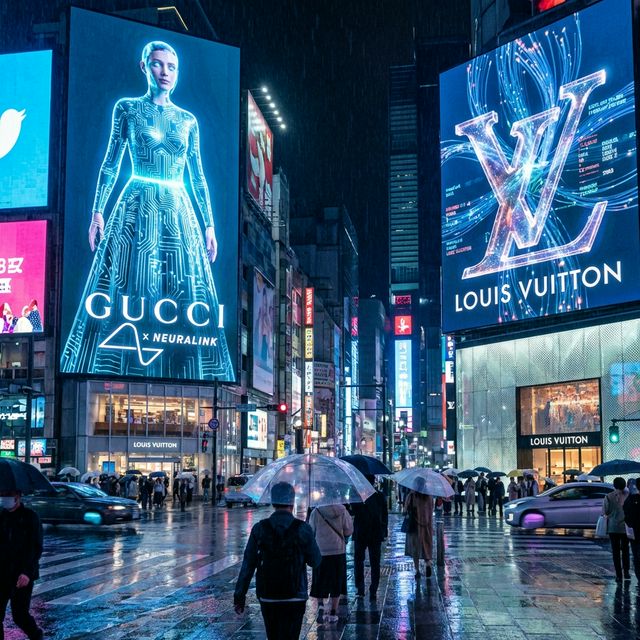
Virtual influencers already sign deals with luxury names. As acceptance widens, ordinary AI creators become eligible for the same money: product placement, sponsored posts, longer-term ambassador arrangements. Brands increasingly treat AI personas as a controllable alternative to human talent, one that never goes off-message.
That is a second income line stacked on top of fan subscriptions. The operator who builds a recognisable persona now, with a consistent look and a real audience, is the one a brand can actually shortlist in 2027.
7. The creator economy keeps growing, and AI does the heavy lifting
Back to Goldman’s near-$480 billion by 2027. AI creators are a primary driver of that growth, and the mechanism is simple: lower barriers pull more entrepreneurs in, higher margins fund faster reinvestment, and generated content reaches markets that a film-and-travel model could never afford to serve. More supply at higher margin against genuinely new demand is exactly what expands a market rather than just reshuffling it.
Are AI influencers the future, or a moment?
Both questions have the same answer if you frame it right. AI influencers are not replacing every human creator, and they are not a fad that fades next quarter. They are a new, cheaper way to produce a category of content that people already pay for, arriving while the rules are still soft and the good spots are open.
If you are reading this in 2026, the useful fact is timing. Supply of operators is still well behind demand, and the easy growth of an early market has a shelf life. The question worth answering is not whether to move, but how quickly you can launch a persona that holds up when the market gets crowded.
Hunaipot builds the persona, generates the content, and sets up the platform so you can start an AI creator business without ever being on camera. Get your AI creator built for you.