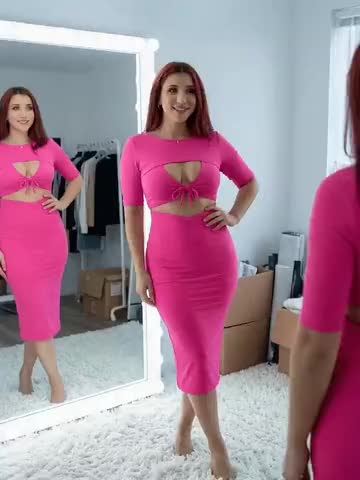

If you search for how to become an AI influencer, you will find two different answers mixed together. One is about being the influencer: a person who uses AI tools to improve their own content. The other is about owning one: building a fictional creator, running it as a business, and staying off camera entirely. This guide covers the second path, because it is the one that works for people with a day job, a family, or a name they would rather keep out of it. Below: the four roles on offer, what each one costs in time, and the order to do things in.
What does it mean to become an AI influencer?
An AI influencer is a fictional person with a consistent face, voice and personality, generated rather than photographed. The full definition of an AI influencer is worth reading if the term is new, but the part that matters here is who stands behind the character.
Nobody “becomes” an AI influencer in the way someone becomes a YouTuber. The character is not you. You are the owner or operator: the person who decides the niche, controls the content, picks the platforms and keeps the revenue. Aitana Lopez, one of the best-known examples, was created by a Barcelona agency, and the Aitana Lopez case study shows how little of that story depends on anyone appearing on camera.
That reframing changes what you need to learn. Acting skills, a good lighting setup and thick skin are irrelevant. Consistency, taste and a repeatable posting routine are not.
Which of the four roles fits you?
Most people who ask this question end up in one of four places. They differ mainly in how much of the production work you do yourself and how many profiles you can realistically run.
| Role | What you do | Time per week (estimate) | Best for |
|---|---|---|---|
| Solo builder | Generate, edit and post everything yourself | 15–25 hours | People who enjoy the tooling and have the patience to learn it |
| Done-for-you owner | Commission the persona and content library, handle promotion only | 5–10 hours | Anyone short on time or unwilling to debug image models |
| Agency operator | Run several personas for yourself or for clients | 20+ hours | Existing social media or management agency owners |
| Hired operator | Manage someone else’s AI creator for a fee or a cut | 10–20 hours | People who want income without carrying the investment |
The hours are estimates from how these businesses tend to run, not measurements, and they swing a lot with niche and posting volume. The point of the table is the shape: the solo builder trades hours for savings, and the done-for-you owner does the opposite.
One role is missing on purpose. “AI influencer who is also the face” (a real person using filters or face-swap tools on their own likeness) is a different business with different risks, and it removes the anonymity that makes this model attractive in the first place.
How do you actually get started?
The sequence matters more than the tools. Operators who start with the tool and work backwards tend to produce a pretty character with nothing to sell.
Pick a niche before you pick a face
A niche is a specific audience with a specific reason to follow. “Fitness” is a category; “home workouts for people over 40” is a niche. Our breakdown of the niches that earn the most is a reasonable place to test a few ideas against real demand before you generate a single image.
Build the persona on paper
Name, age, location, backstory, voice, hobbies, the three things she or he would never post. This document is what keeps month-six content looking like month-one content. It also gives you something to hand to a production team if you decide to outsource.
Solve consistency early
The most common reason AI profiles fail to build an audience is that the face drifts: slightly different cheekbones from one post to the next, a body that changes proportion between outfits. Followers notice before the owner does. The techniques that prevent it are covered in our guide to keeping an AI character consistent, and they are the main reason many new operators decide to buy the build rather than learn it.
Choose where the money comes from
Social platforms bring attention; fan platforms collect revenue. Fanvue and OnlyFans both keep 20% of subscription and tip income, so do not choose between them on fees. Choose on audience, content rules and how each treats AI creators, and read the current policy on both before committing, because it has changed more than once. Check whether the profile must be labelled as AI-generated and plan for that from day one.
Set up promotion as a routine
An account with fifty beautiful photos and no traffic earns nothing. Promotion is where most of your own hours go on any of the four roles, and the guide to promoting an AI influencer lays out the channels worth the effort.
What does it cost, and what can it earn?
Costs split into three buckets: generation tools or a production service, any software for scheduling and editing, and your own time. A solo builder can start with a small monthly tool budget and a lot of hours. A done-for-you route moves the cost to the front and the hours to the back. Either way, budget for a few months of posting before the profile earns anything meaningful.
On earnings, honest ranges are wide. Some profiles take in a few hundred dollars a month; a small number reach into five figures. Most land at the low end for the first quarter, and a profile with no promotion earns nothing at all. Our breakdown of how much AI influencers make separates reported figures from guesses, which is the standard you should hold any income claim to, including ours.
What should you check before you launch?
Three checks, none of them glamorous.
Disclosure. In the US, the FTC expects paid promotions to be labelled, and its guidance on endorsements and influencers applies to a fictional creator as much as a human one. Most large social platforms also ask for AI-generated content to be labelled. Do it from the first post and it never becomes a problem.
Structure. Running the business in your own name defeats the purpose of staying private. An LLC with its own bank account keeps your personal identity out of payment processors and platform records; the anonymous AI business guide walks through the setup.
Legality. Rules on likeness, copyright in generated images and age-appropriate content differ by country. Are AI influencers legal? covers the questions to settle first.
So where should a beginner start?
If you have more time than money and you like tinkering, start as a solo builder and give yourself a hard limit, say ninety days, to get a consistent character and a posting rhythm. If you have the opposite, commission the build and spend your hours on promotion, because that is the part nobody can do for you. The step-by-step launch guide and the broader AI influencer business launch plan pick up from here with the detailed workflow.
Whichever role you choose, the decision that counts is the same: treat the character as a product you own, not an identity you wear. The people who earn from this are almost always the ones who did.
If you would rather skip the build and spend your hours on promotion, get your AI creator built for you by Hunaipot and keep every dollar the profile earns.