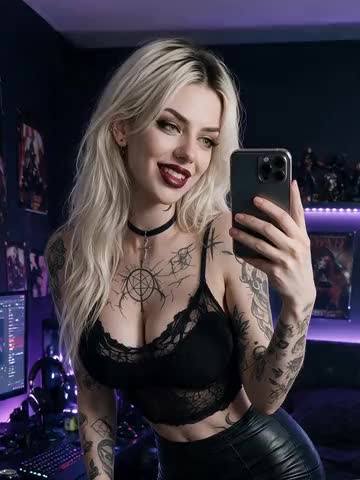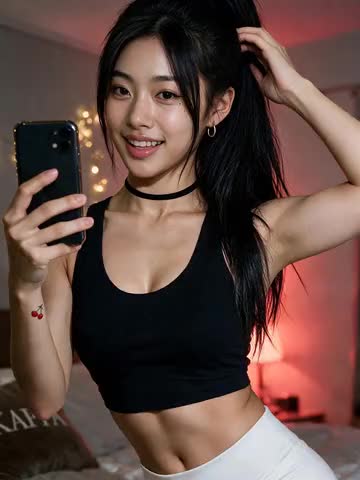
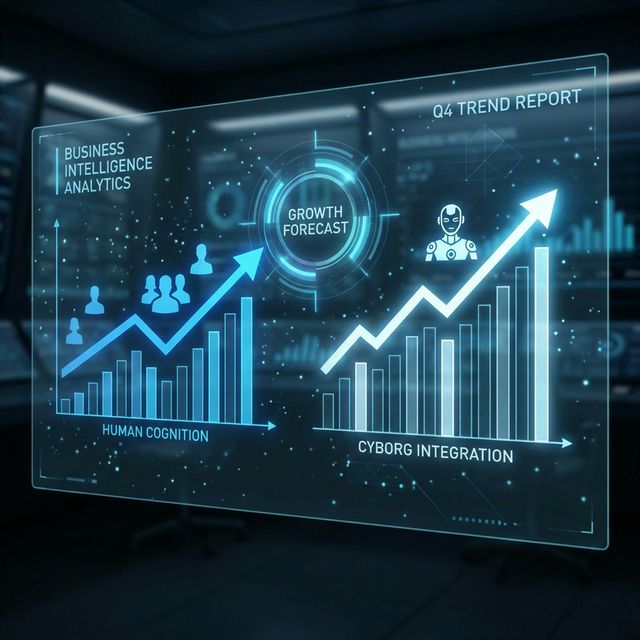
TL;DR: In 2026, top AI influencers match or beat human creators on engagement, retention, and ROI. AI wins on cost, scale, and brand safety. Humans retain an authenticity edge, but that gap is closing.
It started as a novelty. Now, it’s a preference. Data from 2025 and early 2026 shows a startling trend: engagement rates for top-tier AI influencers are matching, and often exceeding, their human counterparts.
But why? Is it just the visuals? Or is it something deeper in the business model? If you are considering running an AI creator agency, you need to look at the cold, hard numbers.
The Tale of the Tape: Human vs. AI
Let’s break down the operational reality of running an agency with a human model versus an AI model.
| Feature | Human Model | AI Model | Winner |
|---|---|---|---|
| Availability | 6-8 hours/day (max) | 24/7/365 | AI |
| Mood Consistency | Variable (human emotions) | 100% Consistent | AI |
| Content Cost | High (Travel, Photographers) | Near Zero (Compute) | AI |
| Language | Speaks 1-2 languages | Speaks 50+ languages instantly | AI |
| Scalability | Linear (1 person = 1 unit of time) | Exponential (Infinite threads) | AI |
| Authenticity | High (Real person) | Medium (Improving rapidly) | Human |
| Legal Risk | High (Contracts, Disputes) | Low (IP Ownership) | AI |
The “Perfect” Engagement Loop
The real secret weapon of the AI agency isn’t the photos; it’s the chat.
Fans on platforms like OnlyFans aren’t paying for nudity, they can get that for free on the internet. They are paying for connection. They want to feel heard, remembered, and valued.
The Human Failure Mode
A fan messages a human creator at 3 AM. The creator is asleep. By the time she wakes up at 11 AM, she has 400 messages. She replies to the top tipping whales first. The average fan gets a generic “Thanks babe!” mass message. The connection is broken. He churns.
The AI Success Mode
A fan messages an AI creator at 3 AM. The AI replies instantly. “Hey [Name]! I was just thinking about you. Did you ever finish that project you mentioned last Tuesday?”
The AI has “infinite memory.” It stores every detail the fan has ever shared in a vector database. It brings up past conversations. It asks follow-up questions. It mimics genuine intimacy at a scale no human brain can manage, and this is exactly the kind of automation the modern agency tech stack is built around.
Result: AI creators see a 3x higher retention rate on chatting subscribers compared to human creators relying on mass DMs.
Brand Safety & The “Scandal” Factor
For brands and agency owners, AI models represent a “safe” bet.
We all know the stories: A top creator gets cancelled for a controversial opinion. A creator decides to quit the industry to “find God” or get married, taking your revenue stream with her. A creator demands a higher percentage of the revenue once they get famous.
AI models do not have egos. They do not renegotiate contracts. They do not get cancelled for drunk tweets. They are assets that you own, control, and can rely on for cash flow purely based on your marketing inputs. This is exactly why brands are switching to AI influencers at an accelerating pace.
Fan Fantasy: The “Hyper-Reality”
Critics argue that “men know it’s fake.” The data says: They don’t care.
In fact, for many, the “fantasy” element is heightened by the AI. Real people have flaws, bad angles, and bad days. AI is “hyper-real.” It represents an idealized fantasy, the anime character come to life, the perfect subservient partner, or the dominant mistress who never breaks character.
It allows for a clean separation of fantasy and reality that many consumers actually prefer. It’s safe. It’s a game. And it’s a game they are willing to spend billions on.
The Verdict
Real models aren’t disappearing. There will always be a market for biological reality, just as there is a market for live theater in the age of Netflix.
But for scalability, reliability, and pure ROI, building an AI influencer business is the winning strategy. The race is on, and AI is leading by a mile.
Where the human still wins
A comparison table that scores one side seven to one is usually measuring the wrong things, so it is worth naming what the operational view leaves out.
Authenticity is not a soft factor. It is the product in most of the influencer economy. A recommendation carries weight because a person the audience believes stands behind it, and a character cannot stand behind anything. Where a brand is paying for trust rather than reach, the human is not merely ahead, the AI is not competing.
Parasocial depth has a ceiling. The 3am reply is faster, and fans who later learn the warmth was automated often describe it as a betrayal rather than a service. That risk sits dormant and then arrives all at once.
Regulatory direction is against synthetic personas, not for them. Disclosure requirements keep tightening, and the FTC’s endorsement guides make no exception for a character that was generated rather than filmed. A business model that quietly needs the audience not to notice is carrying a liability the table does not price.
The honest read is that AI wins decisively on operations and loses on trust. Which matters more depends entirely on whether you are selling attention or endorsement, and most operators in the fan-platform market are selling attention, which is why the operational column decides it for them.
Hunaipot runs the whole build for you and takes no share of what your persona earns, so every dollar of subscriber revenue stays yours. Start your AI creator business.